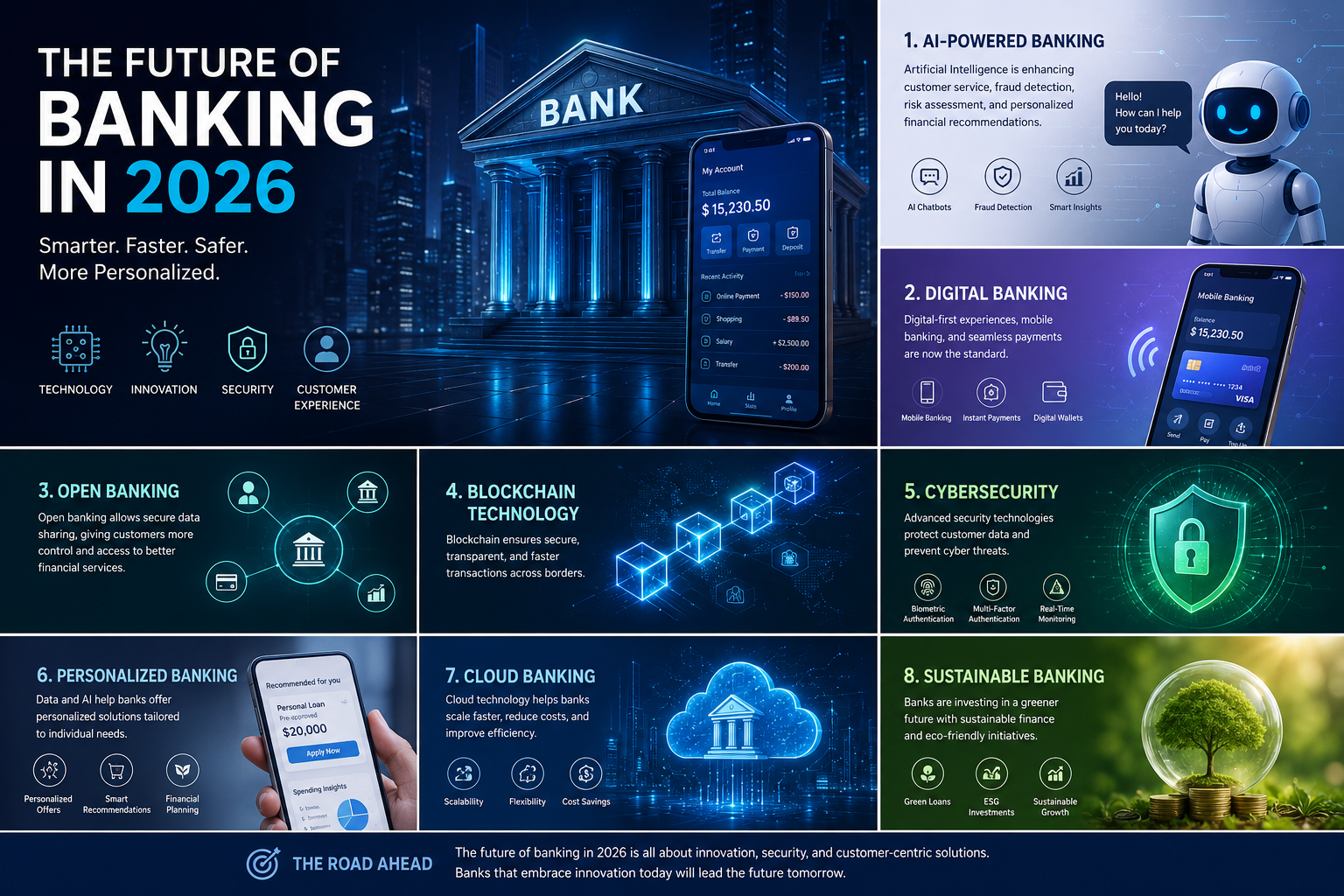
What Is the Future of Banking in 2026? Trends, Technologies, and Opportunities.
The banking industry is undergoing a major transformation in 2026. Rapid advancements in digital technology, artificial intelligence, cybersecurity, and customer expectations are reshaping how financial institutions operate. Traditional banking models are evolving into digital-first experiences that offer greater convenience, security, and personalization.
For businesses and consumers alike, understanding the future of banking in 2026 is essential for staying ahead in an increasingly digital financial landscape.
The Evolution of Banking in 2026
Modern banking is no longer limited to physical branches and manual processes. Financial institutions are investing heavily in technology to provide faster, safer, and more efficient services.
Key areas driving the future of banking include:
- Artificial Intelligence (AI)
- Open Banking
- Digital Payments
- Blockchain Technology
- Cloud Banking
- Enhanced Cybersecurity
- Personalized Financial Services
- Sustainable Banking Initiatives
1. Artificial Intelligence Is Transforming Banking
AI has become one of the most influential technologies in banking. Financial institutions are using AI-powered systems to automate processes, improve customer service, and detect fraudulent activities.
Benefits of AI in Banking
- 24/7 customer support through AI chatbots
- Faster loan approvals
- Fraud detection and prevention
- Personalized financial recommendations
- Automated risk assessment
Banks can now analyze customer behavior and provide tailored financial solutions that improve user satisfaction and operational efficiency.
2. Digital Banking Continues to Dominate
The demand for digital banking services is expected to grow significantly in 2026. Customers increasingly prefer managing finances through mobile apps and online platforms rather than visiting physical branches.
Features of Modern Digital Banking
- Instant account opening
- Mobile check deposits
- Real-time fund transfers
- Contactless payments
- Digital wallets integration
This shift allows banks to reduce operational costs while providing better customer experiences.
3. Open Banking Creates More Financial Opportunities
Open banking enables secure data sharing between banks and authorized third-party providers. This innovation promotes competition and gives customers access to a wider range of financial products.
Advantages of Open Banking
- Better financial management tools
- More competitive lending options
- Faster payment processing
- Improved customer experiences
- Greater financial transparency
Consumers gain more control over their financial data while businesses can offer innovative banking solutions.
4. Blockchain Technology Enhances Security and Transparency
Blockchain is becoming an important component of modern banking infrastructure. Financial institutions are exploring blockchain solutions to improve transaction security and reduce processing times.
Banking Applications of Blockchain
- Cross-border payments
- Smart contracts
- Digital identity verification
- Fraud prevention
- Secure record keeping
Blockchain technology helps create more transparent and trustworthy financial systems.
5. Cybersecurity Remains a Top Priority
As banking becomes increasingly digital, cybersecurity threats continue to evolve. Financial institutions are investing heavily in advanced security technologies to protect customer information.
Cybersecurity Trends in 2026
- Biometric authentication
- Multi-factor authentication
- AI-powered threat detection
- Real-time fraud monitoring
- Zero-trust security frameworks
Strong cybersecurity measures are critical for maintaining customer trust and regulatory compliance.
6. Personalized Banking Experiences
Modern customers expect personalized services tailored to their financial needs. Banks are leveraging data analytics and AI to deliver customized experiences.
Examples of Personalized Banking
- Customized loan offers
- Automated savings recommendations
- Personalized investment advice
- Spending insights and budgeting tools
- Individualized financial planning
Personalization helps banks build stronger customer relationships and increase loyalty.
7. Cloud Banking Is Accelerating Innovation
Cloud technology enables banks to operate more efficiently and scale services quickly. Many financial institutions are migrating core banking systems to cloud-based platforms.
Benefits of Cloud Banking
- Lower infrastructure costs
- Improved scalability
- Enhanced security
- Faster product development
- Better disaster recovery capabilities
Cloud adoption is expected to continue growing throughout 2026 and beyond.
8. Sustainable and Green Banking
Environmental responsibility is becoming a significant focus for financial institutions. Banks are introducing sustainable finance initiatives and environmentally friendly banking products.
Sustainable Banking Trends
- Green loans
- Renewable energy financing
- ESG-focused investments
- Paperless banking services
- Carbon footprint reduction programs
Customers increasingly prefer institutions that demonstrate a commitment to sustainability.
Challenges Facing the Banking Industry in 2026
Despite significant advancements, banks face several challenges:
- Increasing cybersecurity risks
- Regulatory compliance requirements
- Competition from fintech companies
- Customer privacy concerns
- Rising technology implementation costs
Financial institutions must balance innovation with security and regulatory obligations.
The Role of Fintech in the Future of Banking
Fintech companies continue to drive innovation across the financial sector. Partnerships between traditional banks and fintech firms are becoming more common.
Fintech Contributions
- Faster digital payments
- Automated lending platforms
- Advanced financial analytics
- Improved customer onboarding
- Innovative investment solutions
The collaboration between banks and fintech companies is expected to accelerate financial innovation in 2026.